
E-commerce
How Custom Shopify Liquid Themes Improve Conversion Rates (2026 Playbook)

Shopify is the e-commerce default in 2026 for a reason: reliable infrastructure, a battle-tested checkout, and a strong ecosystem. But most stores hit a ceiling on a generic theme — especially on mobile. That ceiling shows up as lower conversion rates, higher bounce, and “it looks nice but doesn’t sell” frustration.
At BinarySolz, we design and build custom Shopify Liquid themes that improve performance, UX clarity, and conversion — without turning your storefront into a heavy app stack. This playbook walks through what actually moves the needle and how to prioritize it.
If you’re still deciding platforms, start with our pillar guide: WordPress vs Shopify vs Webflow in 2026.
Why theme quality impacts conversion (more than most people think)
Your theme is not just branding — it controls the purchase journey:
- Speed: slow pages kill intent, especially on mobile data.
- Information hierarchy: shoppers need the right answers at the right moment.
- Trust: clarity and polish reduce perceived risk.
- Friction: each extra click, modal, or confusing variant selector leaks revenue.
When we improve conversion, we rarely “add more.” We remove confusion, reduce friction, and make the storefront feel fast and confident.
Custom Liquid theme vs off-the-shelf theme: what’s the real difference?
Premium themes are a great starting point. Custom Liquid themes become necessary when your brand and product strategy require more than a template can offer.
| Area | Template theme | Custom Liquid theme |
|---|---|---|
| Performance | Good baseline, varies by apps | Engineered for Core Web Vitals + app discipline |
| Mobile UX | Generic patterns | Designed from real scroll + thumb behavior |
| CRO flexibility | Limited blocks/sections | Purpose-built sections for your funnel |
| Brand fidelity | “Close enough” | Exact match to your design system (Figma → Liquid) |
| Maintainability | Depends on theme/app updates | Clean, documented code tailored to your stack |
7 CRO wins we implement in high-converting Shopify themes
1) Make product pages scannable in 5 seconds
Shoppers skim. We structure the PDP so the essentials are visible fast:
- Clear title + price + key variant
- Shipping/returns snippet near the add-to-cart
- Trust signals (reviews summary, payment badges) without clutter
- Sticky add-to-cart on mobile for long pages
2) Fix variant selection (the silent conversion killer)
Variant UX issues create confusion and cart abandonment. We improve:
- Size and color selectors that show state clearly
- Stock messaging that’s honest and useful
- Default selections that reduce decision fatigue
- Accessible controls (keyboard + screen readers)
3) Improve perceived speed (and actual speed)
In 2026, speed is both SEO and conversion. Typical improvements:
- Image strategy: correct sizes, modern formats, lazy loading
- Remove unused theme JS/CSS and third-party scripts
- Load critical UI first, defer non-critical widgets
- App discipline: replace heavy apps with lightweight alternatives or custom code
4) Build trust into the layout (not in a footer)
Trust should appear exactly where doubt appears:
- Shipping timelines near cart actions
- Returns policy near sizing/fit questions
- Social proof near the decision point
- Security/payment trust near checkout
5) Reduce “checkout surprise”
Surprises destroy conversion. We make pricing transparent:
- Estimated shipping messaging (even if exact is at checkout)
- Clear discount behavior and eligibility
- Cart that answers questions instead of adding friction
6) Use sections that support your funnel
Sections aren’t decoration — they are sales tools. We commonly build:
- Benefit-first hero blocks
- Comparison grids for bundles/tiers
- FAQ accordions that address objections
- Story + proof blocks (UGC, before/after, results)
7) Instrument and iterate (without breaking the theme)
CRO isn’t one launch. We set up a theme that supports iteration:
- Clean section architecture (reusable, predictable settings)
- Event tracking that doesn’t bloat performance
- A/B testing readiness (where it matters)
Core Web Vitals: what to target on Shopify
These targets are realistic for well-built Shopify themes:
- LCP: aim < 2.5s on mobile
- INP: aim < 200ms by reducing JS and third-party scripts
- CLS: aim < 0.1 with stable media and consistent layout
We treat performance as part of brand trust — a store that feels fast feels more credible.
How we approach a custom Shopify theme project
- Audit: measure current performance, app load, UX friction, and analytics.
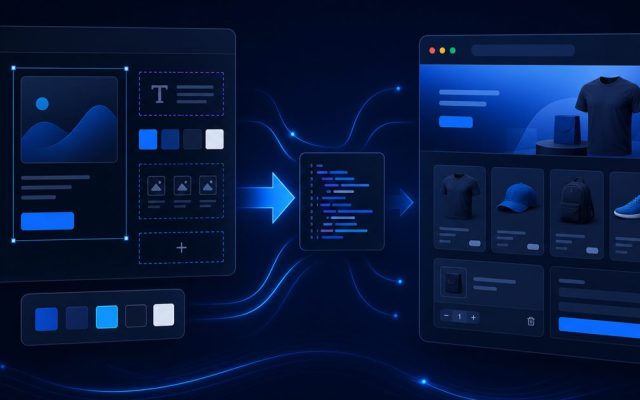
- Figma → Liquid plan: map templates, sections, and reusable components.
- Build: structured Liquid, predictable section settings, minimal JS.
- QA: mobile-first testing, checkout flows, accessibility, and speed checks.
- Launch + iterate: monitor conversion metrics, ship improvements in controlled releases.
Next steps
If you want a Shopify theme that looks premium and converts, we can help. Explore our services or book a free strategy call to map your funnel and identify the fastest conversion wins.
Frequently Asked Questions
Do custom Shopify themes improve conversion rates?
Yes — when the changes reduce friction, improve mobile UX, and speed up key pages. The biggest wins usually come from clearer product pages, better variant UX, faster load times, and fewer checkout surprises.
Is a custom Liquid theme better than buying a premium theme?
Premium themes are great for many stores. Go custom when you need exact brand fidelity, unique layouts, better performance, or CRO-focused sections that templates cannot deliver cleanly.
How long does a custom Shopify theme take?
A focused custom theme often takes 3–6 weeks. Larger builds (multiple templates, custom sections, migrations, heavy QA) can take 6–10+ weeks depending on scope.
Will apps slow down my Shopify store?
Many apps add scripts that impact Core Web Vitals. App discipline matters. We audit and replace heavy apps where possible or implement lightweight custom alternatives.
What are the most important pages to optimize first?
Product pages, collection pages, cart, and any paid-traffic landing pages. These are the pages that typically control conversion rate.
Can you redesign my Shopify store without changing my products?
Yes. Theme work is primarily presentation and UX. Products, collections, and content can remain intact while we improve layout, speed, and sections.
What Shopify performance metrics matter most for conversion?
LCP, INP, and CLS (Core Web Vitals) plus real funnel metrics: add-to-cart rate, checkout initiation, and purchase completion.
Can BinarySolz build a custom Shopify Liquid theme?
Yes. We build custom Liquid themes from Figma, optimize for performance, and implement CRO patterns tailored to your products and audience.
Continue reading

E-commerce
WooCommerce vs Shopify in 2026: Which E-commerce Platform Fits Your Business?
WooCommerce vs Shopify in 2026: compare costs, flexibility, content + commerce, performance, and which platform fits your e-commerce business goals.
· 4 min read

CRO
E-commerce CRO: Design & Development Tactics That Actually Move the Needle
E-commerce CRO tactics that work in 2026: PDP UX, mobile checkout, speed, trust signals, A/B testing, and dev-led conversion wins...
· 4 min read
Process
From Figma to Live Shopify Store: Our Exact Process for High-Converting Themes
Our Figma to Shopify process: design handoff, Liquid theme build, mobile UX, performance, QA, and launch — how BinarySolz ships...
· 6 min read